Impact of AVs and E-Commerce on Municipal Budgets [REPORT]

The Impact of AVs and E-Commerce on Local Government Budgeting and Finance (Clark, Larco and Mann) is a new report from us here at Urbanism Next/SCI that takes you through a city’s budget —both revenues and expenditures — and describes the areas that will be affected as AVs become commonplace and e-commerce takes on an even larger role in retail. City leaders have to start planning for this future now if they want to have a voice in what AVs/e-commerce will do to their cities.

While E-Commerce is already disrupting local economies and AVs create a “potential rat’s nest of a budgeting challenge” (Fung 2016), our report starts the process of untangling that rat’s nest.  This report provides the foundation for future work in this area around a finer grain analysis of municipal budgets and consideration of future revenue sources for the infrastructure changes that are sure to arise with the integration of AVs and more widespread e-commerce.  Stay tuned for more.


AVs and Streets – A Guide to Potential Impacts

We have been asked numerous times about how the introduction of AVs (and E-commerce) might affect streets.  As cities make plans for future expansions, changes to their street network, the inclusion of various modes/complete streets, and overall street design – what should they be considering when they include thinking about AVs?

Here is a short list:

Curbside space allocation for pick-up and drop-off – This will become a large issue as demand for this space will increase substantially – especially at peak travel times.  It could also cause significant disruption to transit and bike networks as AVs compete for curbside access and cut across bike and transit lanes.

E-Commerce Delivery – Similar to above, as e-commerce expands, there will demand for curb space and places to temporarily park vehicles as deliveries are made.  In addition, we will probably be seeing a large increase in delivery vehicles (an expansion of a specific kind of freight) which will affect streets and corridors?

Separation of Modes – As AVs have algorithms that don’t allow them to hit people (a fantastic development), a corollary will be that anyone walking or biking in the street can cause mass disruptions to the transportation network.  A “critical mass ride” of one.  This had led to calls for stronger separation between modes – a disastrous proposal – imagine our streets starting to look like China’s where there are fences between modes.

Drones on Streets – Not the flying kind (those are probably further off in the future) but the terrestrial ones.  Picture an Amazon truck parking in a neighborhood and sending off twenty delivery AV rovers.  Will those drive in the street? On the sidewalk?  How will they affect other modes? What should we suggest or try to regulate?

Micro Transit Corridors – Lyft and Uber are pushing shared rides (Lyft-Line and Uber Pool) and are already incentivizing people to make their pick-up and drop-offs happen along arterials or more heavily travelled routes to reduce the vehicles efficiency (see this earlier post).  This will define micro-transit routes throughout the city.  Where will these be? Should cities help define the routes? How will it affect all modes moving through these areas?

Reduction/Elimination of Parking – We are already seeing a reduction of parking use in some venues as Lyft and Uber takeoff (see this earlier post, and this one).  As this happens more and more – research says we will need 10-15% of current parking spaces – what happens to the onstreet parking?  Is it transferred to other modes or additional lanes?  What happens to the buffering role it currently plays in many streets?

Changes to Available ROW – Building on this last point, if AVs need narrower lanes (they are better drivers than we are) and potentially can increase throughput through some streets (see point on this below) and therefore allow a reduction in necessary lanes – how will we use the available ROW.  This is especially critical as available ROW seems to be one of the larger limitations to increasing dedicated infrastructure for transit, bikes, and pedestrians.

Increase in VMT – Most modeling of AVs we have seen show an increase in VMT, but this is more dramatic in scenarios where we all have our own vehicles vs shared fleets.  This is especially so if we don’t tax empty cars (zombie cars) driving around as they wait for their owner or go do errands on their own.  How will this increased VMT affect other modes, congestion, etc? How can we make sure we limit it?

Efficiency of Streets (for cars) – AVs in theory will be more efficient, require less space and be able to move faster.  Many models have been created that show connected vehicles zooming towards each other at intersections and just barely missing as they efficiently move people and goods.  What this fails to recognize is that one of the larger impediments to this type of free-flow movement is the fact that multiple users exist in the right-of-way.  Pedestrians and bikes would not work well in these scenarios.  This leads to thinking that there may be two worlds of cars on streets – those where they dominate (definitely freeways, but will that also start including arterials and collectors…) with free flow of vehicles and other areas where other modes are considered as well.  Will the mixing of modes be frowned upon because it is such a limitation to this efficiency?  Will some areas ban bikes/peds?

Street as a Utility – This is more of a meta-concept, but the idea is that we need to stop thinking of the street as a public space that we can all use whenever and however we want, but instead should think of it as a utility that has limited capacity.  Related to how we pay for the amount and time of our electricity use (in places), we can think of streets similarly.  This might lead to something like a geometry tax (you are charged for how much space you take up on the roadway divided by the number of people in the vehicle – a great deterrent to zombie cars).  — Stay tuned for an upcoming post focused on this topic!

Finance – We have done a quick pass at how these technologies will be affecting municipal revenues and – in short – it will not be pretty or easy (see our report here and see analysis of parking/car related revenue impacts here).  A lot of disruption (for example the drastic reduction of parking fees and traffic tickets while we are needing to pay for retraining large groups of the population who used to work in retail or driving jobs). Limited budgets will affect everything else government tries to do and services it provides – streets included.


Parking garages are already becoming dinosaurs

I’m seeing a giant meteor coming that will, metaphorically speaking, put a huge hole in municipal budgets. This meteor will be AVs. The meteor that pushed dinosaurs to extinction may have done so with one big hit, the AV evolution might be a bit slower. A recent article in Governing Magazine provides us with evidence that the impact of AVs is being foreshadowed by the likes of Uber and Lyft (often collectively referred to as TNC or transportation network companies).

Airport managers nationwide are expressing concern in how the TNC are disrupting the budget models that airports have long had in place. Carter Morris (VP with the American Association of Airport Executives) has stated that “airports need to adapt and do it quickly.” Many airports have seen dramatic drops in fees collected from taxi companies and car rental companies because so many people are just using the TNCs instead. So now more than 200 airports nationwide are charging pick-up and/or drop off fees for the TNCs, just as they might have with taxis—though the exact revenue models are quite varied. As fee revenues decline, airports may look to airlines to pay more, which could drive them away from the small/medium size airports.

And if you are wondering how much of an impact TNCs are having on the ground transportation game, look no further than “San Francisco International Airport, where TNCs accounted for more than two-thirds of commercial ground transportation in May.” Lyft and Uber are preparing for an AV future, airports should too!

To learn more about the impact of AVs on municipal budgets in the Urbanism Next report coming out in late July. You’ll find a link to the report here on the blog.

Lyft: 1 Billion AV-EV Rides Per Year by 2025

We have often talked about some of the important parameters guiding the future effects of AVs on cities to be the question of AV fleets vs individual ownership as well as AVs cost.  Lyft recently announced that its platform will provide 1 billion autonomous vehicle rides per year by 2025 – and they project these rides to be electric vehicles.  This points heavily towards a model of mobility as a service – at least in parts of the country – and a dramatic drop in the number of parking spots needed in cities.

Supporting the idea that autonomous fleets are in our future, GM (Lyft’s partner in the AV/EV/Ride-sharing arena) said that its Bolt AV will be costing something in the six-figures, most probably precluding it from the private ownership model, but absolutely viable in the ride-sharing model.

All signs pointing to Robin Chase’s FAVES in our future (Fleets of Autonomous Vehicles that are Electrified and Shared).  Good news for those interested in urbanism and sustainability.

Federal AV Legislation???

There seems to be a push for federal AV legislation as the GOP is putting a package of bills forward on this topic.  Of issue for Urbanism Next topics is that the bills continue the national trend of dealing with AV regulation in terms of how to accommodate the autonomous vehicle and not on the secondary effects these vehicles will have on our cities.  The GOP package is focused on how the vehicles themselves will be regulated and permitted – for instance, a draft of the bills have an exemption of up to 100,000 vehicles per manufacturer from federal motor safety vehicle rules.

A big question here is what role the feds and/or the states will have in regulation.  A good argument can be made about the problems with a patchwork of regulations across different states that are both cumbersome to manufacturers and a burden for the states themselves to develop – especially with so many unknowns about how this technology will play out.  National leadership makes sense, but we are in a strange situation where this technology is advancing very quickly and therefore giving the states the ability to work more nimbly at a more local level may be prudent.

Again – in relation to Urbanism Next concerns, we would not want to see federal regulations that limit states’ ability to create and experiment with incentives and potential taxation structures that will help promote community benefits.  The goal is to make great places to live and to improve quality of life (and figuring out how AVs fit into that picture), not just to get AVs on the road.

(UPDATE:  A more recent article tracking the mark-up of the package of bills is here)


Micro-Transit is not a free-for-all

Micro-transit (privately operated transit) is seeing a new rise as Lyft-Line and Uber-Pool bring together each company’s ride sourcing model with the power of combining different riders along a route.  As more people choose these options, the system becomes more and more efficient as there are greater chances of finding a few people who want routes similar to yours.

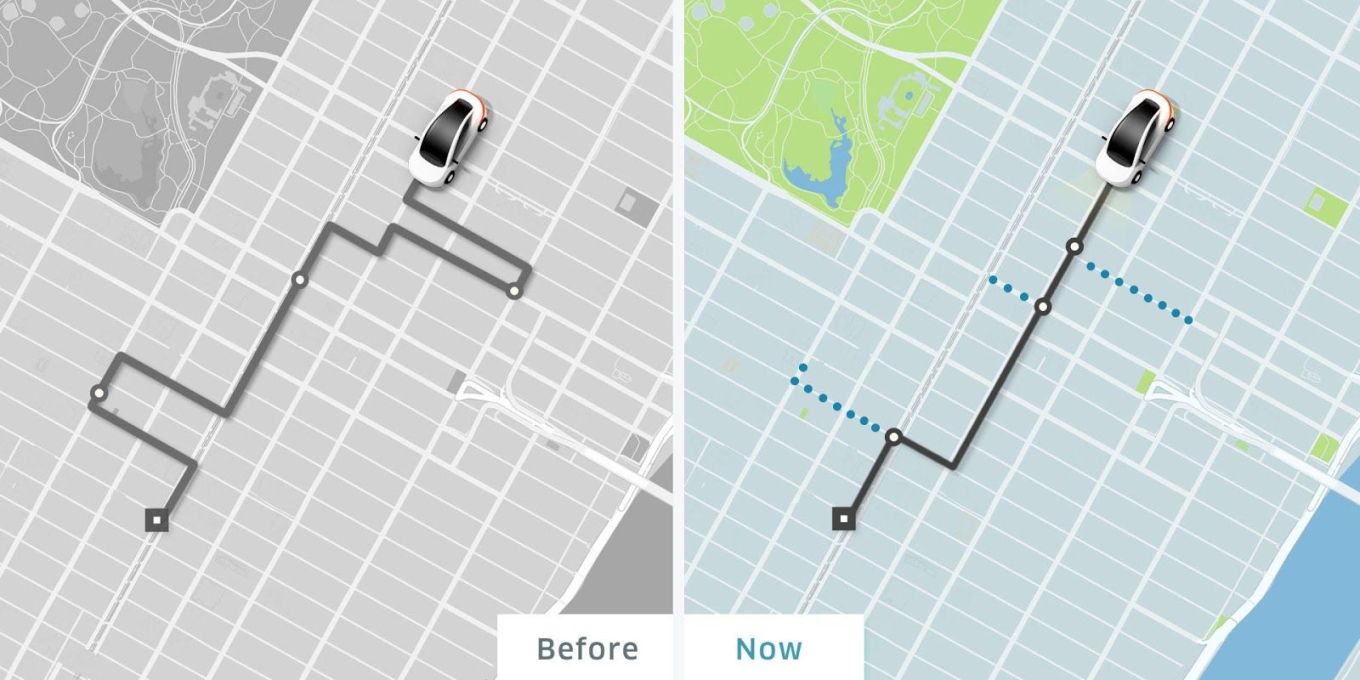
While some have envisioned this as a free-for-all where micro-transit now operates from any destination to any destination, eliminating some of the hierarchies inherent to fixed route transit, this is not exactly the case.  Both Lyft and Uber have recently made moves to make their ride services more efficient by having riders walk to higher volume streets.  Lyft has introduced ‘Pickup Suggestions‘ and Uber has their ‘walk to the corner system‘  – incentivizing people to walk to the nearest avenue or arterial instead of being picked up on a more minor street.  This reduces travel time which allows more people to be picked up (without becoming frustrated at the wait).

From a city development perspective, this points to the continued importance of higher volume streets as transit hubs (even if it is not traditional transit) and begs the question of how to make pickups and drop-offs most efficient along these high volume routes (a designated spot on each block?).  There are obvious benefits to having some kind of hierarchy in micro-transit – how should we design streets that can accommodate this?

Image Source: Uber